
Planned Works
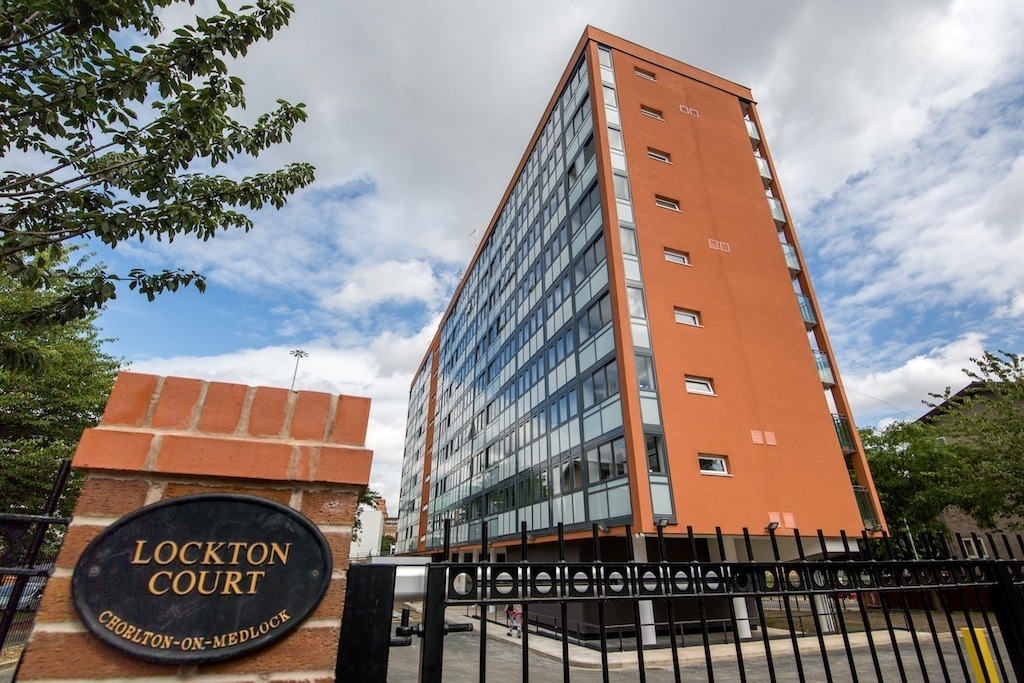
A guide to planned works
If you are a leaseholder, you will benefit from improvements to communal areas in your building. Depending on where you live this could include improvements to balcony spaces and windows and doors; redecoration of communal areas; improved security; lifts in multi-storeys; as well as improvements to external areas and fencing.
We have developed a 30 year “lifecycle” plan which outlines the proposed programme of work over the next 30 years. We will consult you if we intend to carry out any work that will cost any one leaseholder £250 or more. This is in line with Section 20 (S20) of the Landlord and Tenant Act 1985. You can read our guide to S20 consultation here. If you have any questions about planned works, please contact us.
What are planned works?
Planned works are repairs, maintenance, or improvements to a building or any other premises that S4B are responsible for.
Generally, planned works are required to keep the building and communal parts in appropriate repair and condition. This can mean adding something new to the building or improving an existing component.
Some leases do not allow us to carry out improvements and in those cases, we will replace them with like-for-like components instead.
We will always review your lease before carrying out planned work.
What is the difference between a repair and an improvement?
Generally, repairs are necessary to maintain the existing property condition, while improvements enhance or alter the property, adding value or changing its nature. Sometimes there can be uncertainty around what constitutes a repair or an improvement particularly where technology has advanced for example replacing wooden framed windows with uPVC framed windows. Where there is any doubt we will take appropriate advice before undertaking work.
Am I responsible for repairs and planned works?
As a Leaseholder, you are responsible for maintaining and repairing the inside of your home. As your landlord, Manchester City Council (MCC) are required to repair and maintain the building and associated areas. This includes the structure, exterior and common components. Under the terms of your lease you are responsible for contributing toward the cost of this work.
It is important that you read and understand your lease to understand your responsibilities as a Leaseholder. When purchasing your home, your Solicitor will have provided you with a copy.
If you don’t have a copy of your lease, you can ask your Solicitor or complete a Land Registry Search for land and property information.
You can also request a copy from us (fees apply) by contacting us:
Telephone: 0300 555 0128
Email: info@s4bmanchester.co.uk
How do you decide what planned works are needed?
S4B will agree annually the works that will take place in each upcoming financial year with MCC. This will be agreed based on a lifecycle programme of your individual block. The works identified in the lifecyle programme are necessary to ensure the upkeep of your building and meet MCC’s commitment to carbon neutral by 2038.
Before any works are delivered, we review the plans again to confirm they are still required. At this point, we may need to bring the work forward in the programme or we may delay the works.
How do you calculate the cost of planned work contributions?
Before work starts, we work with our repairs and maintenance partner, Mears as well as other members of the S4B consortium to discuss the life cycle plan and identify the estimated costs for the year ahead.
We use these estimated costs to calculate the cost per property, which will determine your individual contribution.
How do I pay for the work?
If you have a sinking fund in place (see our guide to service charges) we will deduct the cost of the work from that fund. If you do not have a fund in place or the there is not enough money in your fund, then we will invoice you for the balance not covered by a fund. We will always write to tell you the cost of the work; how much is likely to be covered by a fund and how much you will have to pay out of pocket.
I purchased my home through the Right to Buy within the last five years, do I still need to pay?
If you have a valid S125 notice in place we can only charge you for works listed on that notice for the first five years. If this work is not included on the notice you will not be charged. We will confirm in writing whether or not you have to pay.
How do I know I am getting value for money for this work?
We will always consult under Section 20 of the Landlord and Tenant Act where necessary. Our repairs and maintenance partner, Mears, will provide quotes and a specification for each project so leaseholders can be sure that we are achieving value for money. Please see our guide to Section 20 for more information.
Is there any support available to pay for this work
“The Social Landlords Mandatory Reduction of Service Charges (England) Directions 2014” are in place to protect leaseholders who meet specific criteria from excessing planned works costs, by putting an annual cap on the amount they can be charged in any five-year rolling period. This means that, if you are a residential leaseholder, you will not pay more than £10,000 for planned works in any five-year rolling period.
Glossary of terms
We have developed a Glossary of Terms to explain any unfamiliar words and phrases contained in our customer guides and correspondence.
We’re here to help
If you have any questions or concerns, we’re here to help. You can get in touch with us by emailing us, telephoning 0300 555 0128 or via WhatsApp message to 07418 367 396 between 9am-5pm Monday to Friday.
Please note, this guide is for customers of S4B who have purchased their home through traditional Leasehold or the Right to Buy .
This guide is not a comprehensive interpretation of the law, nor does it override or affect the terms of your lease. Each lease is different, so you should always refer to it for information specific to your home. It is important that you read your lease carefully. If there is anything in your lease that you do not understand, we recommend that you seek independent legal advice. If there are any differences between this guide and your lease, the lease will always take precedence.